How AI Is Quietly Changing the Accounting Profession
Artificial intelligence isn't just a buzzword in accounting anymore — it's already changing how professionals work, learn, and make decisions. This post looks at the real, practical ways AI is showing up in the accounting world, and what it means for anyone building a career in the field.
A Shift That's Already Happening
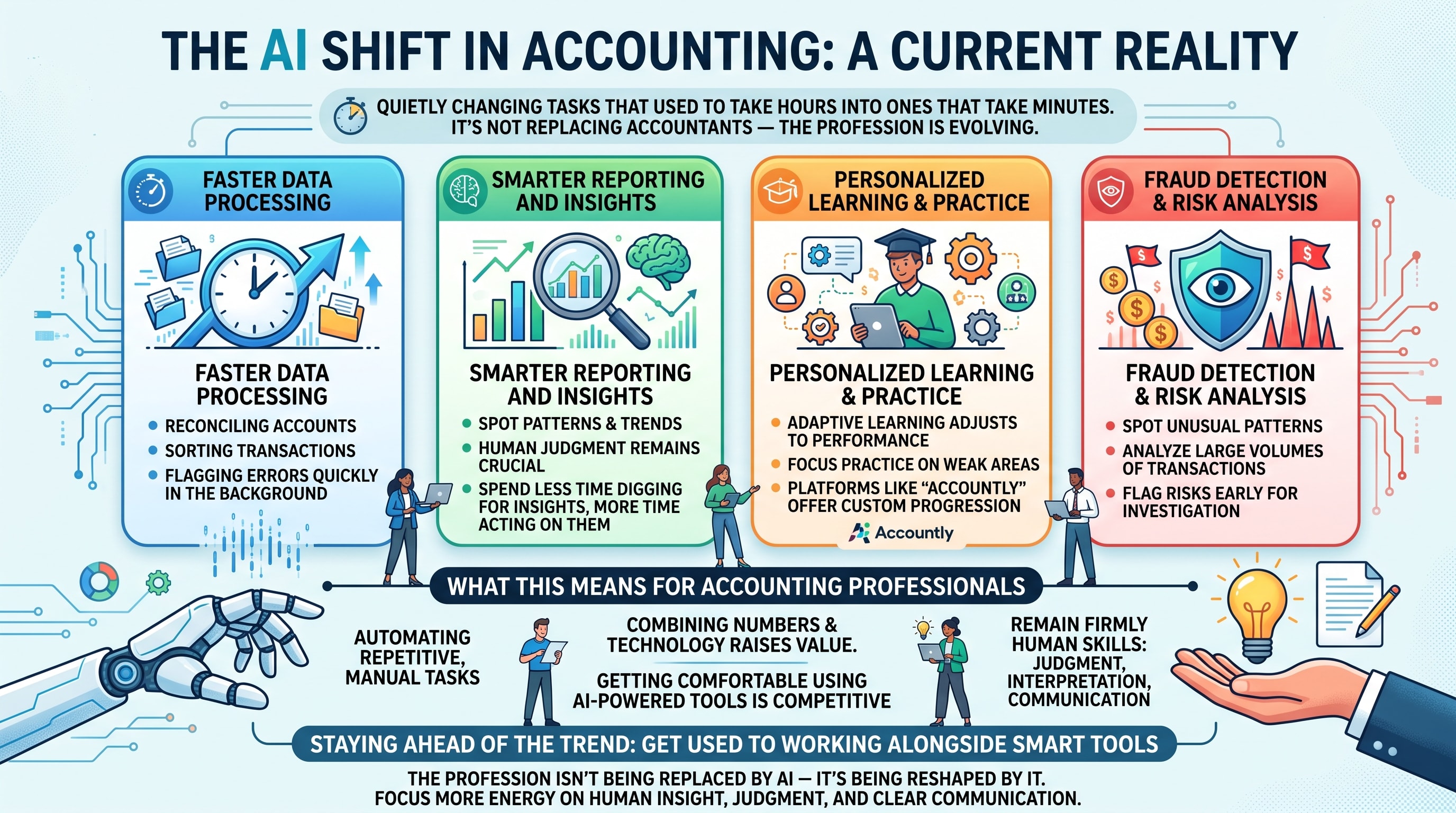
For a long time, conversations about AI in accounting sounded like something far off in the future. That's no longer the case. AI is already part of daily accounting work in many organizations, quietly changing tasks that used to take hours into ones that take minutes. This isn't about robots replacing accountants — it's about the profession itself evolving, and understanding this shift matters for anyone building a career in finance today.
Where AI Is Already Making an Impact
- Faster Data Processing
One of the clearest changes is in how quickly financial data can be processed. Tasks like reconciling accounts, sorting transactions, and flagging errors used to require hours of manual checking. AI-powered accounting automation now handles much of this in the background, catching inconsistencies faster than a person scanning line by line ever could.
- Smarter Reporting and Insights
Beyond just processing numbers, AI tools are increasingly able to spot patterns and trends within financial data — things that might take an experienced analyst much longer to notice manually. This doesn't remove the need for human judgment, but it does mean professionals spend less time digging for insights and more time acting on them.
- Personalized Learning and Practice
AI is also changing how accounting professionals and students prepare and stay sharp. Instead of static textbooks and one-size-fits-all question banks, AI accounting learning tools can adjust to a person's actual performance — focusing more practice on weak areas and less on topics already mastered. Platforms like Accountly use this kind of adaptive approach, offering practice that reflects how each individual student is actually progressing, rather than a fixed, generic path.
- Fraud Detection and Risk Analysis
AI systems are also playing a growing role in spotting unusual patterns that could indicate errors or fraud. By analyzing large volumes of transactions far faster than a human review process, these tools can flag risks earlier, giving accounting and finance teams more time to investigate before small issues become bigger problems.
What This Means for Accounting Professionals
It's natural to wonder whether these changes threaten accounting jobs. The more accurate way to think about it is that AI is changing what the job looks like, not removing the need for skilled professionals. Repetitive, manual tasks are being automated, while judgment, interpretation, and communication — explaining what the numbers actually mean to a business — remain firmly human skills.
This shift actually raises the value of professionals who understand both the numbers and the technology around them. Being comfortable using AI-powered tools, rather than avoiding them, is quickly becoming part of what makes someone competitive in the accounting industry.
Staying Ahead of the Trend
For students and early-career professionals, this is a good moment to build comfort with AI-driven accounting technology rather than treating it as something to catch up on later. This doesn't mean becoming a technical expert — it means getting used to working alongside smart tools, whether that's through AI-powered practice platforms, automated reporting software, or data analysis tools now common in modern finance teams.
Final Thought
The accounting profession isn't being replaced by AI — it's being reshaped by it. The professionals who benefit most from this shift are the ones who stay curious about these tools instead of avoiding them. As AI continues to take over repetitive, time-consuming tasks, the real opportunity lies in focusing more energy on the parts of accounting that still require human insight, judgment, and clear communication.