How to Deal With Exam Anxiety Without Losing Your Preparation
Feeling nervous before an exam is normal, but for many students, anxiety gets bad enough to affect performance even after months of solid preparation. This post looks at practical ways to manage exam anxiety, so nerves don't undo the work you've already put in.
When Preparation Isn't the Problem
It's a strange but common situation: a student studies for weeks, understands the material well, and still walks into the exam hall feeling completely overwhelmed. By the time they sit down to write, their mind goes blank, even on topics they knew perfectly the night before. This is exam anxiety, and it's one of the most underestimated factors in exam performance.
The good news is that anxiety isn't something you either have or don't have permanently. It can be managed with a few practical habits, both before and during the exam.
Understand What's Actually Happening
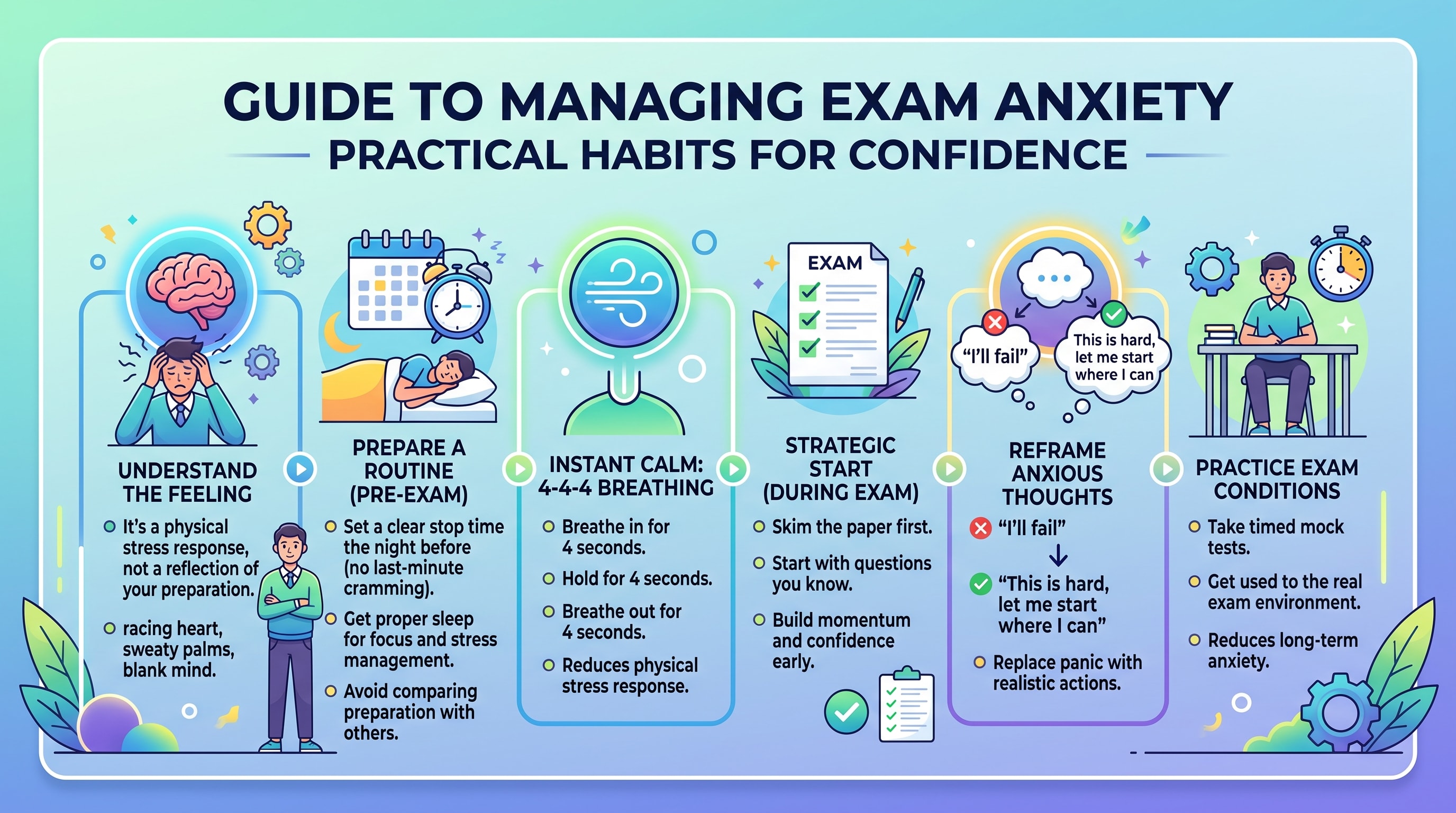
Exam anxiety isn't a sign of weak preparation — it's your body reacting to pressure, often more than the actual difficulty of the exam. A racing heart, sweaty palms, or a blank mind right before an exam are physical stress responses, not a reflection of how much you know. Understanding this alone can reduce some of the panic, because it separates "I'm anxious" from "I'm not ready."
Prepare a Routine, Not Just Content
Most students focus all their preparation on content and leave the days right before the exam unplanned. This gap often makes anxiety worse. Having a simple routine for the final days — what to review, when to stop studying, when to sleep — gives your mind something structured to follow instead of spiraling into last-minute panic.
A few things that help:
- Set a clear stop time for studying the night before. Cramming until the last minute usually increases anxiety more than it improves recall.
- Get proper sleep before the exam. Lack of sleep makes it much harder to manage stress and stay focused.
- Avoid comparing your preparation with others right before the exam. Conversations about "how much someone else studied" rarely help and often increase pressure.
Use Breathing to Calm Physical Symptoms
When anxiety hits right before or during an exam, slow breathing is one of the fastest ways to calm your body down. A simple method is to breathe in for four seconds, hold for four seconds, and breathe out for four seconds, repeating a few times. This doesn't just feel calming — it actually reduces the physical stress response so your mind can focus better on the questions in front of you.
Start With What You Know
If anxiety hits the moment you open the exam paper, don't force yourself to start with question one. Skim through the paper first and begin with a question you feel confident about. Answering something correctly early on builds momentum and confidence, which naturally reduces anxiety for the rest of the exam.
Reframe Anxious Thoughts
Thoughts like "I'm going to fail" or "I don't remember anything" tend to spiral quickly during an exam. Instead of trying to force these thoughts away, it often helps to replace them with something more realistic: "This question is hard, but I know parts of it — let me start there." This small shift keeps your mind working instead of freezing.
Practice Under Exam-Like Conditions
One of the most effective ways to reduce exam anxiety long-term is exposure. Practicing under timed, exam-like conditions — not just reading notes — makes the real exam feel more familiar and less intimidating. This is where structured accounting exam prep and mock tests become useful, since they let you experience the pressure of a real exam beforehand, in a lower-stakes setting.
Final Thought
Exam anxiety doesn't mean you're unprepared — it means your body is reacting to pressure, and that reaction can be managed. A calm routine before the exam, simple breathing techniques, and enough practice under real exam conditions can make a big difference in how in control you feel on exam day. The goal isn't to remove nerves completely — it's to stop them from getting in the way of everything you've already worked hard to prepare.