Time Management in the Exam Hall: How to Avoid Running Out of Time
Many accounting students know the material but still lose marks simply because they run out of time in the exam. This post breaks down practical time management strategies to use before and during the exam, so preparation actually turns into results.
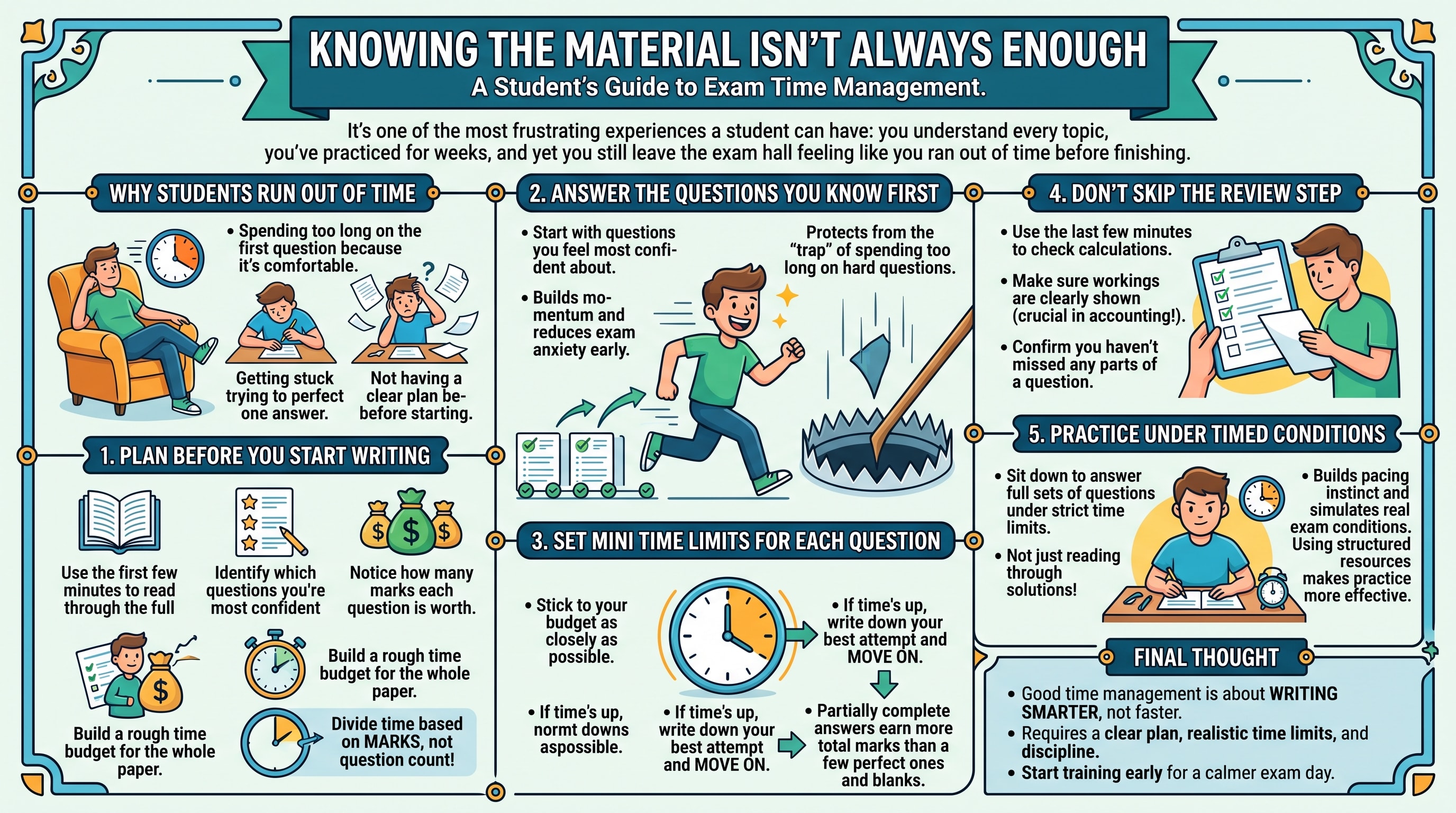
Knowing the Material Isn't Always Enough
It's one of the most frustrating experiences a student can have: you understand every topic, you've practiced for weeks, and yet you still leave the exam hall feeling like you ran out of time before finishing. This isn't a knowledge problem — it's a time management problem, and it's completely fixable with the right approach.
Why Students Run Out of Time
Most time issues in exams come down to a few common habits: spending too long on the first question because it feels comfortable, getting stuck trying to perfect one answer instead of moving on, or not having a clear plan before starting. None of these are about ability — they're about exam strategy, and strategy can be practiced just like any other skill.
Plan Before You Start Writing
Before answering a single question, spend the first few minutes of the exam reading through the full paper. This might feel like wasted time under pressure, but it actually saves time overall. It helps you:
- Identify which questions you're most confident about
- Notice how many marks each question is worth
- Build a rough time budget for the whole paper
A simple rule many students use is to divide the total exam time based on marks, not on how many questions there are. A question worth more marks deserves more of your time, and a question worth fewer marks should not eat into your schedule.
Answer the Questions You Know First
There's no rule that says you must answer questions in the order they appear. Starting with questions you feel most confident about builds momentum and reduces exam anxiety early on. It also protects you from a common trap: spending too much time struggling with a hard question early in the exam, only to rush through easier ones later.
Set Mini Time Limits for Each Question
Once you have your time budget, stick to it as closely as possible. If a question is allotted 15 minutes and you're not done, it's usually better to write down your best attempt and move on, rather than spending 25 minutes trying to perfect it. A partially complete answer for every question usually earns more total marks than a few perfect answers and several blank ones.
Wearing a watch or keeping the clock visible helps you check your pace without losing focus. Checking in every 20–30 minutes is usually enough to stay on track without becoming distracting.
Don't Skip the Review Step
If your time management goes well, you should have a few minutes left at the end. Use this time to check calculations, make sure workings are clearly shown, and confirm you haven't missed any parts of a question. In accounting exams, workings often carry marks even if the final answer is wrong, so leaving them incomplete can cost you more than expected.
Practice Under Timed Conditions
Time management in the real exam is hard to master if you've never practiced it beforehand. This is why doing accounting practice under timed conditions matters just as much as reviewing content. Sitting down to answer a full set of questions within a strict time limit — not just reading through solutions — builds the pacing instinct you'll need on exam day.
Using structured accounting exam prep resources that simulate real exam conditions can make this practice more effective, since you get a realistic sense of how much time each type of question actually takes you.
Final Thought
Good time management isn't about writing faster — it's about writing smarter. A clear plan, realistic time limits for each question, and the discipline to move on when needed can be the difference between a paper that reflects your real knowledge and one that doesn't. Like any other exam preparation skill, this only becomes natural with practice, so the earlier you start training for it, the calmer exam day will feel.