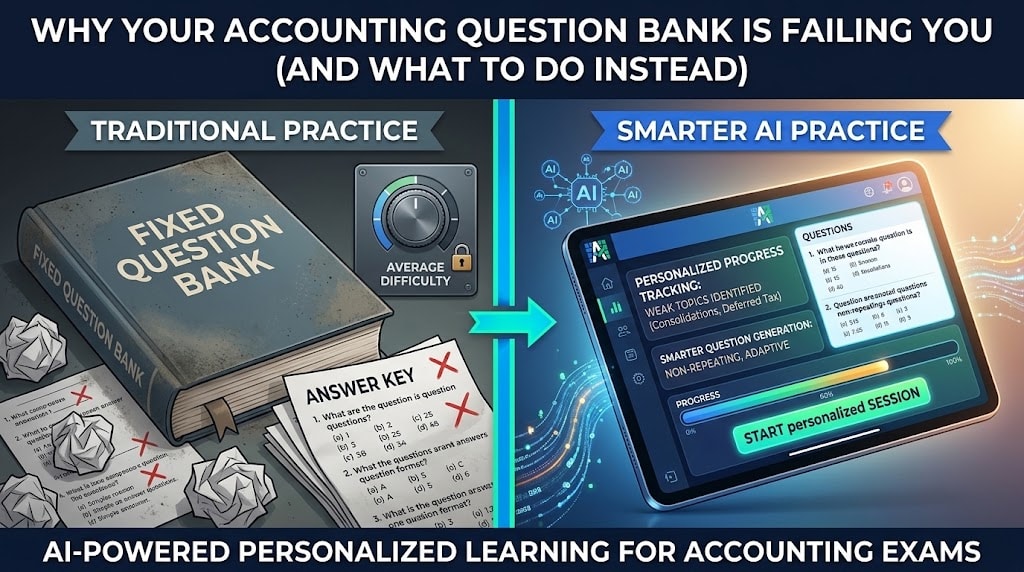
Why Spaced Repetition Is the Study Method Accounting Students Are Missing
Many accounting students study hard but still forget what they learned. The real problem is not effort — it is timing. This post explains spaced repetition, a simple and proven study method, and shows how the right accounting practice tools can help students remember more for a longer time.
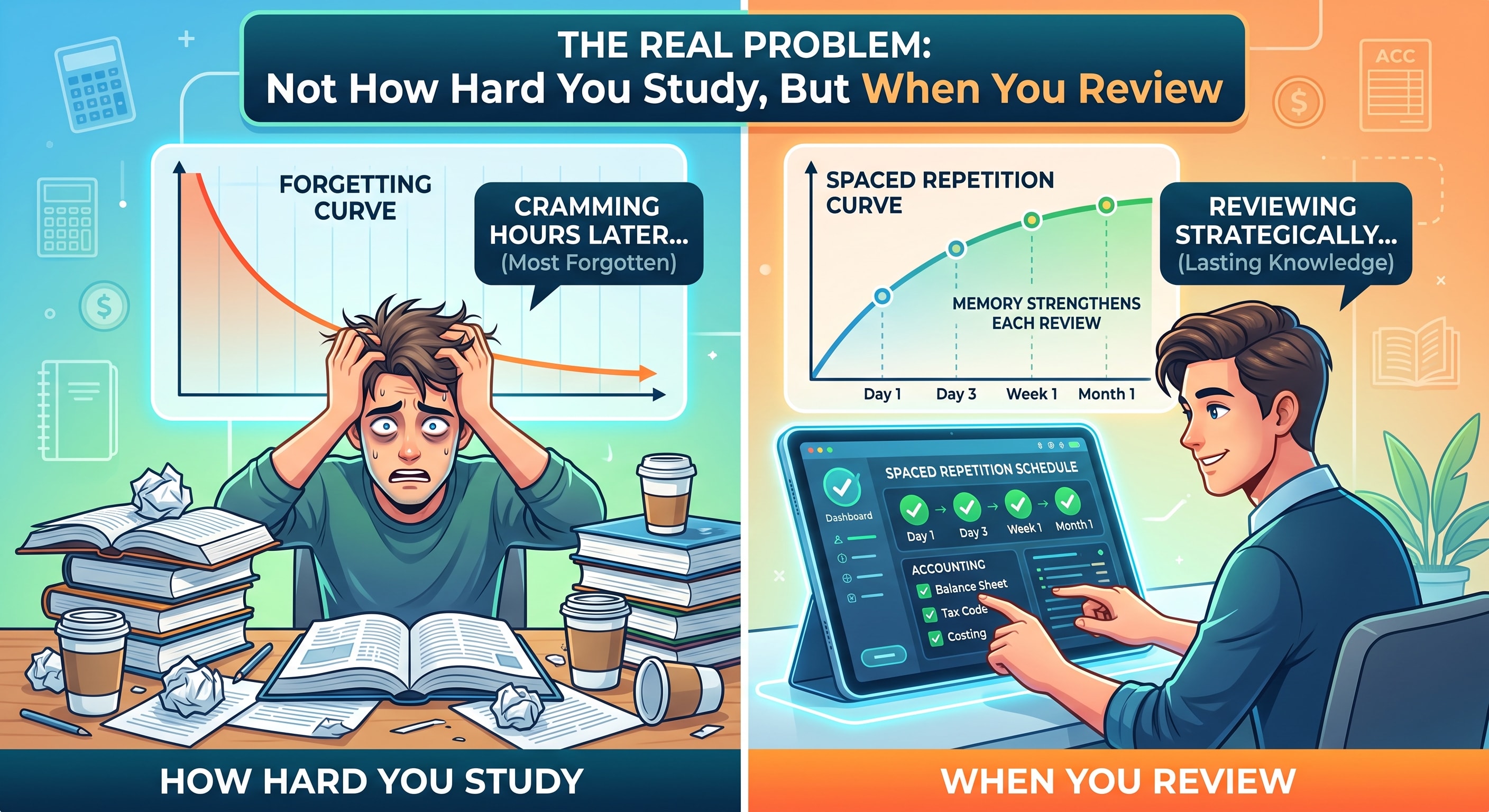
The Real Problem: Not How Hard You Study, But When You Review
Every accounting student knows this feeling. You understand a topic well the night before. You answer a few questions correctly. Then, two weeks later, in a mock test, the same topic feels new again. This is not because you didn't try hard enough. It happens because of bad timing.
Our memory does not stay the same over time. If we don't review something, we forget most of it within a few days. The answer is not to study for more hours. The answer is to review at the right time, in a way that matches how our brain remembers things. This is the main idea behind spaced repetition. It is one of the most useful, but most ignored, tools in accounting exam prep.
What Is Spaced Repetition?
Spaced repetition means going back to a topic again and again, but with longer gaps each time — one day later, then a few days later, then a week later, then a month later. You review each topic right before you are about to forget it. Every review makes the memory stronger and helps you remember it for longer.
This matters a lot in accounting, because topics build on each other. Ideas like financial reporting, tax rules, or costing methods are not things you learn once and forget. Later lessons depend on earlier ones. So if you forget the basics, everything you learn after that becomes harder too.
Why Normal Study Habits Don't Work Well
Most students either re-read their notes again and again, or go through the same question bank just once. Both of these ignore the idea of spacing. Re-reading feels helpful because the content looks familiar. But feeling familiar is not the same as actually remembering it. You are recognizing the answer, not recalling it on your own. This difference becomes a big problem during a real exam.
This is where adaptive accounting prep helps. Instead of reading the same chapter once and moving on, good accounting self-study should bring back topics automatically, at the right time, based on how well you did last time — not just on how recently you studied it.
How to Build Spaced Repetition Into Your Routine
You don't need a complex system to begin. A few simple habits are enough:
- Review before you forget, not after. A short 10-minute review the next day works much better than a long re-read a month later.
- Mix topics instead of doing one at a time. Switching between different topics during a practice accounting session helps you truly recall the answer, instead of just guessing based on the last question.
- Track what you get wrong, not just what you finish. A good accounting question bank should automatically point out your weak areas, so you spend time where it matters most.
- Try to answer first, before checking the solution. Answering a question on your own, even if you're not sure, helps you remember it much better than simply reading the answer first.
How the Right Tools Can Help
This is exactly the gap that a smart accounting practice platform can fill. Instead of you keeping track of what to review and when, an AI accounting learning system can show you the right questions at the right time. It brings back weak topics before you forget them, and gives you less practice on topics you already know well.
Platforms like Accountly offer interactive accounting quizzes that change difficulty and avoid repeated questions — something a normal book cannot do. This kind of finance practice platform grows with you, instead of staying at one fixed level. When this is combined with performance tracking, your accounting skills training is based on real data about your strengths and weaknesses, not guesswork.
For anyone serious about accounting test prep, the goal is not just to cover more topics. The real goal is to make sure what you've already studied actually stays in your memory. That is the true value of good online accounting quizzes and accounting study tools — they turn one-time practice into knowledge that lasts.
The Takeaway
Spaced repetition is not just a productivity trick — it works because it matches how memory naturally works. Students who build regular review time into their routine, and use financial accounting practice tools that adjust to their performance, remember more and rely less on last-minute cramming. The goal is not to study for more hours. It is to make every hour of accounting practice actually count.