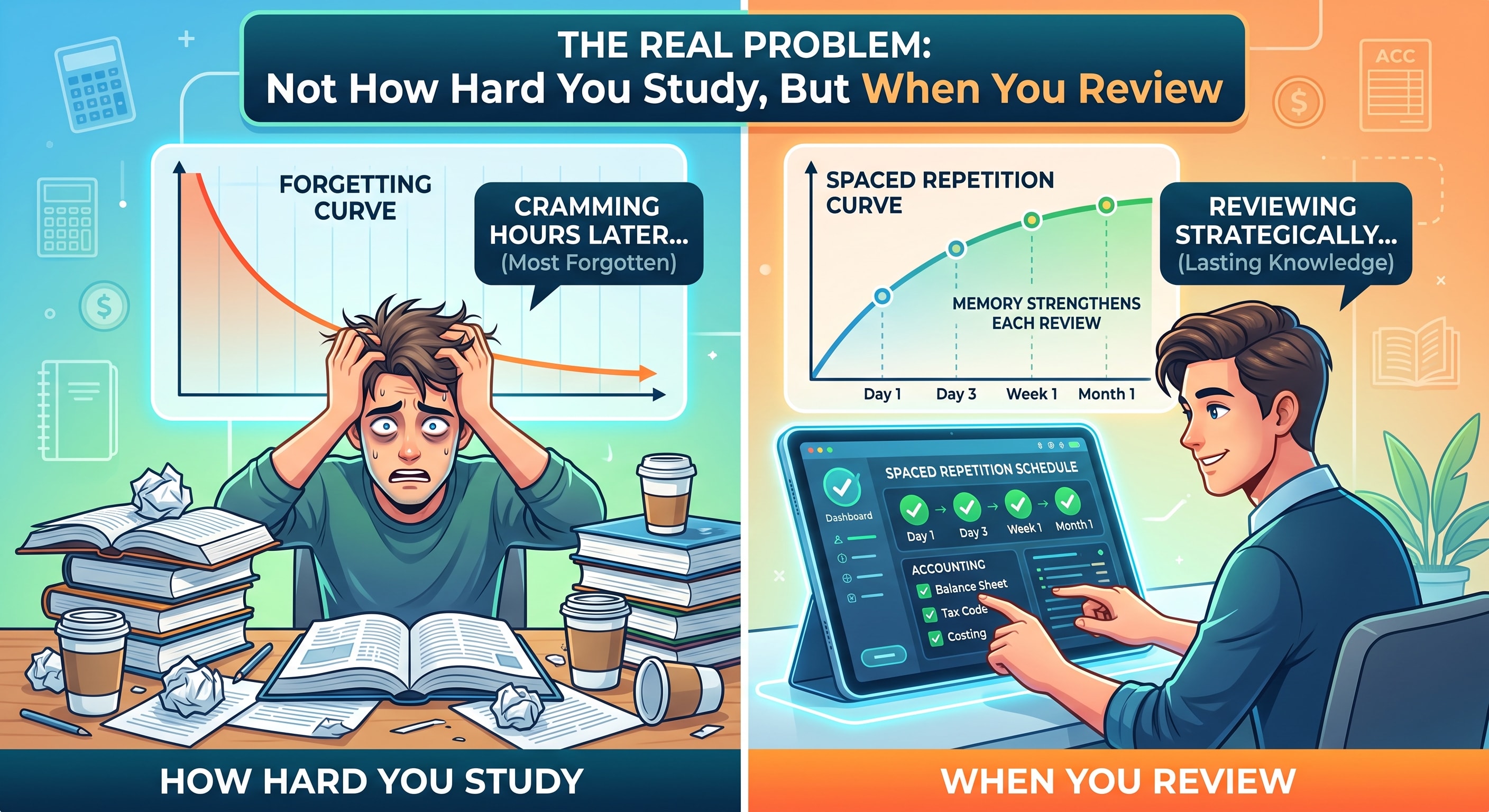
Why Traditional Practice Questions Are Failing Accounting Students (and What to Do Instead)
Static, repetitive question banks give students false confidence and no real insight into their weak areas. This blog breaks down why traditional accounting practice materials fall short and how AI-powered, adaptive tools fix the repetition, difficulty, explanation, and progress-tracking gaps.
Why Static Accounting Practice Isn't Enough Anymore
Have you been using the same question bank for weeks? If yes, you may have noticed something: the questions start to feel familiar. You are not really being tested anymore. You are just remembering the answers. This is not an accident. It is a real problem with most accounting practice materials, and it is quietly holding back thousands of accounting students every attempt.
The Repetition Problem
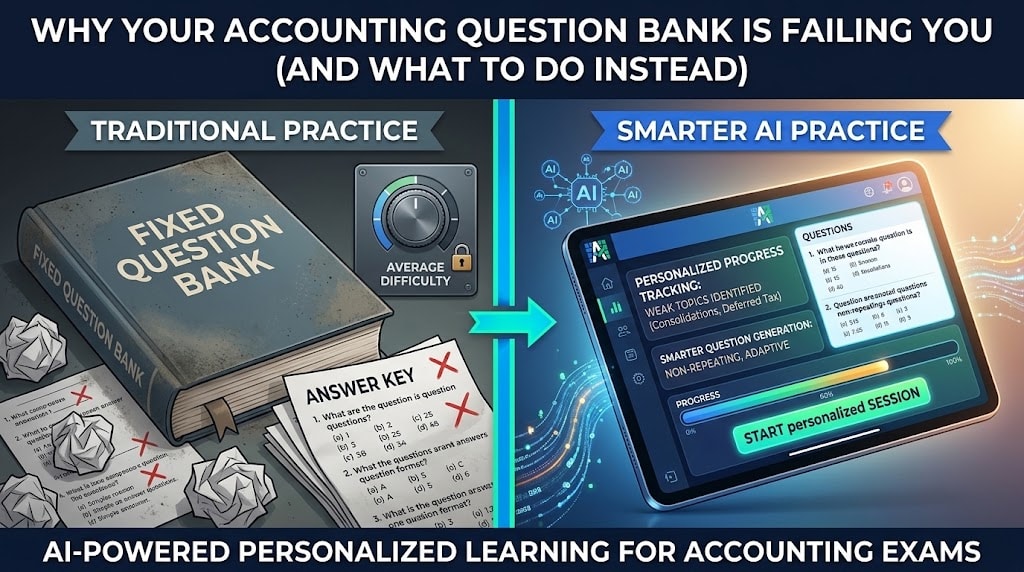
Traditional accounting question bank resources — printed books or simple online portals — only have a fixed set of questions. After going through them two or three times, you stop solving problems. You start just recognizing patterns. This gives you false confidence. You feel ready because you "know" the practice questions. Then, in the real exam, a slightly different question throws you off.
This is one of the biggest hidden risks in accounting exam prep: thinking you know something just because it feels familiar.
Same Difficulty Level for Everyone
Most accounting test prep materials are made for an "average" student. This means they don't really fit anyone well. If you are ahead, you waste time on easy questions. If you are weak in one topic — like consolidations or deferred tax — you don't get extra practice where you need it most. Good accounting skills training should change based on the student, not stay the same for everyone.
This is why adaptive accounting prep matters. A system that changes difficulty based on how you perform gives you more practice on your weak points and less on what you already know well. A printed book cannot do this.
Not Enough Explanations
Getting a question wrong is only useful if you understand why. Many traditional materials just give you an answer key, with no real explanation of the logic or the rule being tested. This is especially hard for students doing accounting self-study without a tutor to ask. Good online accounting quizzes should give a clear, simple explanation for every question, so your mistakes actually teach you something.
No Clear View of Your Progress
Ask most students where they are weak, and they will guess — they won't really know. Traditional financial accounting practice does not track your performance by topic in a useful way. So students end up studying topics they are already good at, just because it feels productive. Good accounting study tools should clearly show which topics need more work, so you spend your time where it matters most.
What Students Should Use Instead
The answer is not more practice. It is smarter practice. A good accounting & finance practice platform built with AI can fix all these problems:
- Smart accounting practice creates new, non-repeating questions, so you are always being tested, not just remembering old answers.
- Interactive accounting quizzes change difficulty in real time, giving you more practice exactly where you are weak.
- AI accounting learning tools give instant, correct explanations for every question — this matters, because general AI chatbots often get accounting answers wrong.
- Performance tracking turns your guesses about weak areas into a clear, simple study plan based on your actual syllabus.
The Bottom Line
Passing your accounting exam on your first try is not about how many questions you have seen. It is about how well you can think through new ones. Traditional practice materials were made for an older way of studying — one without tools that adapt, personalize, and explain in real time. If your study plan is still just a question bank and an answer key, it may be time to upgrade.